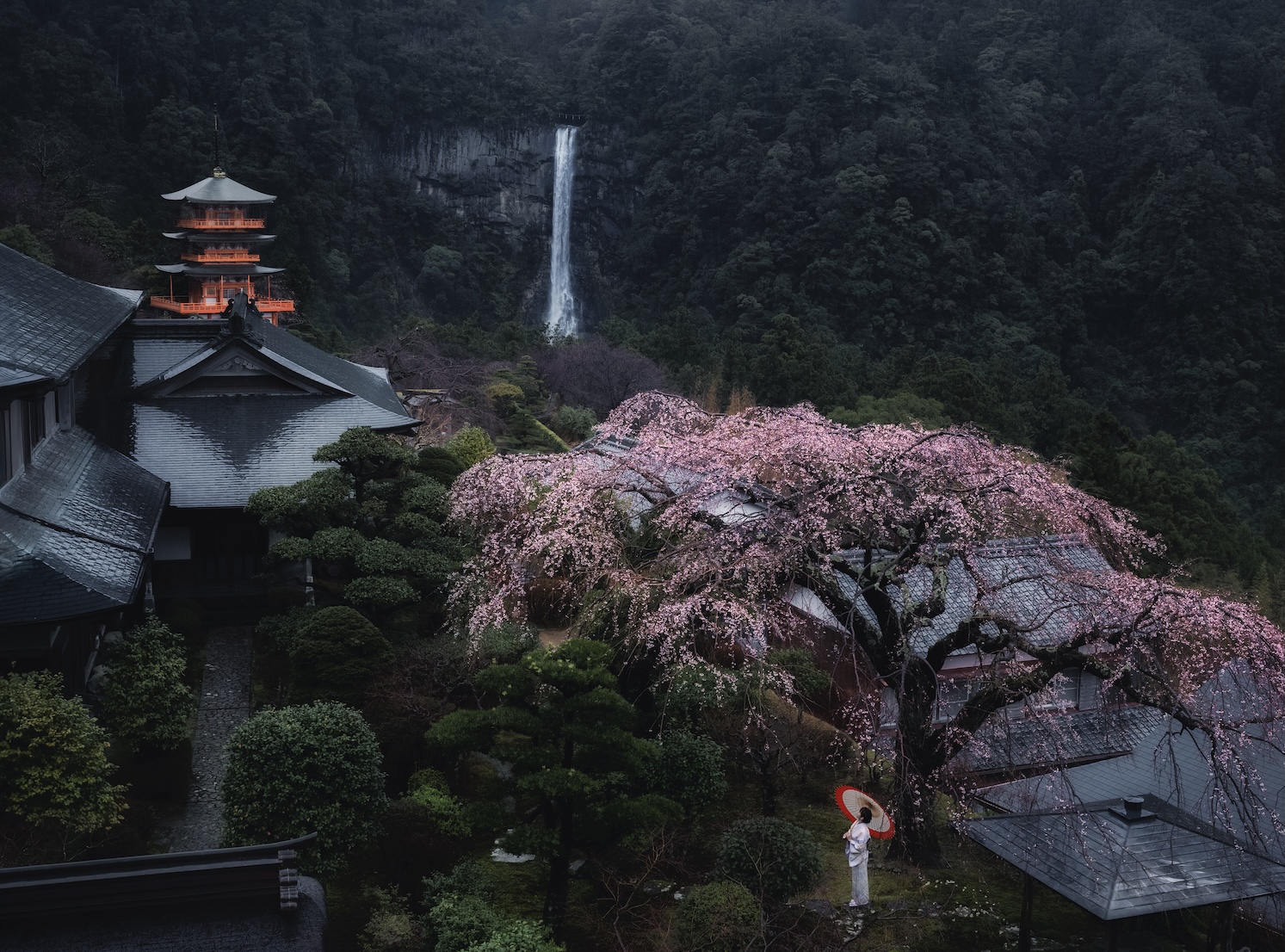
Known as the Land of the Thunder Dragon, Bhutan is an ancient kingdom where culture and spirituality remain deeply woven into daily life. Blessed with rare flora and fauna, sacred Neys (holy sites) charged with natural energy, and a philosophy that values happiness above wealth, Bhutan offers more than a journey… it offers perspective.

A Love for the Royals
Bhutan is often called the world’s happiest country, and much of that joy comes from the people’s devotion to their monarchy. The royal family has long been admired for its care of the nation — from the former king’s unprecedented voluntary abdication in 2006 to usher in reforms, to today’s beloved ruler, H.M. King Jigme Khesar Namgyel Wangchuck. Revered as the “People’s King,” he is known for walking to remote villages, listening to his citizens, and ensuring progress never leaves the countryside behind.
Spectacular First Impressions
Even before landing, Bhutan takes your breath away. Paro Airport is famed as one of the world’s most challenging runways, surrounded by mountains that require pilots to land manually. Hold your breath for the dramatic descent — and for the sweeping views of the valleys below.
Insider tip from Uniq Luxe: choose a left-side seat when flying in and a right-side seat on departure for the best views.


Champions of Sustainable Tourism
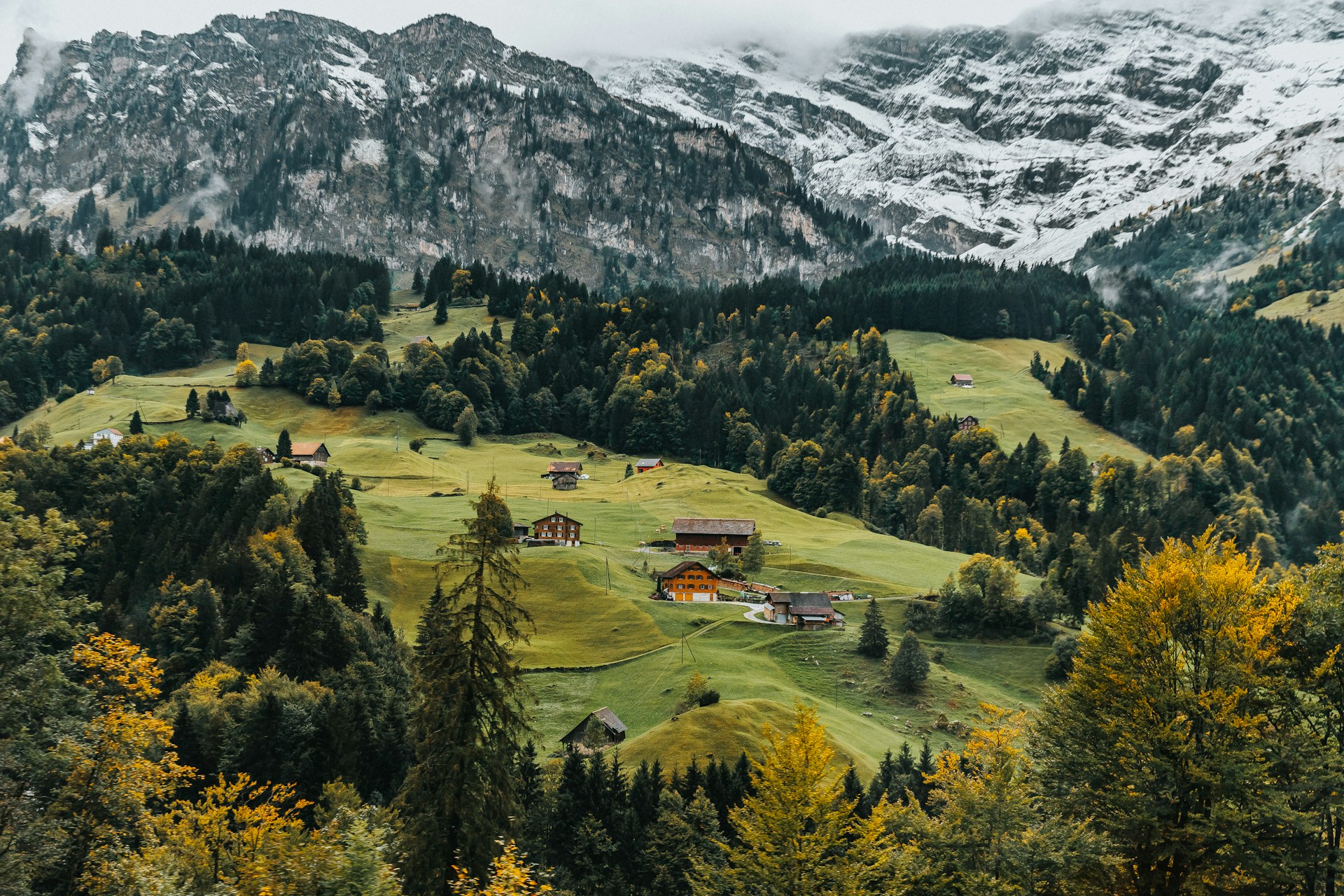
Bhutan is the world’s only carbon-negative nation, absorbing three times more carbon dioxide than it produces. Forests cover 72% of the land. Conservation here is not a campaign. It is constitutional.
Every international traveller pays the Sustainable Development Fee, known as the SDF. The current rate is USD 100 per person per night, paid directly to the Bhutanese government. This fee is separate from your hotel, guide and transport costs, which are priced and arranged independently.
The SDF funds free healthcare, free education and the conservation programmes that keep Bhutan what it is. Children under six pay nothing. Travellers aged six to 12 pay 50%.
Your visit contributes to all of this. The fee is not a surcharge. It is participation.
In Bhutan, your visit is part of preserving its future.

Luxury in the Mountains
Bhutan’s landscapes are mirrored by a collection of extraordinary stays:
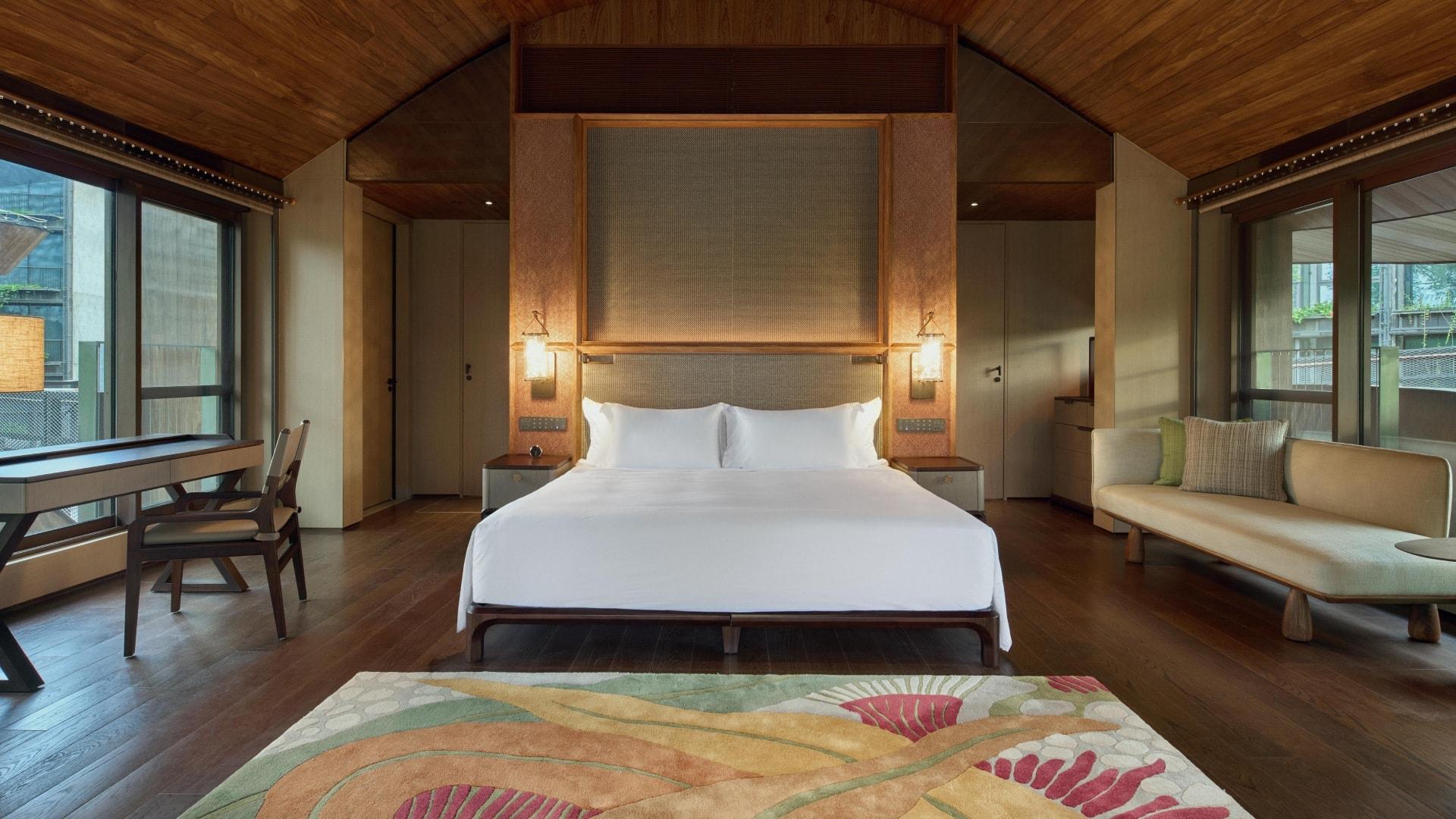
Bhutan’s most remarkable stays are woven through its valleys like quiet sanctuaries of spirit and landscape. Amankora spans five lodges across forests and highland passes, including Paro’s forest-hugged retreat where glass-walled yoga suites look out toward Dzong ruins and Mount Jomolhari. COMO Uma Punakha and Paro offer hilltop and valley sanctuaries surrounded by emerald rice paddies and rushing rivers. Six Senses Bhutan unites its five lodges through wellness rituals, meditation spaces, and sweeping Himalayan panoramas. In Thimphu, Terma Linca—a royal-built resort—invites guests to experience traditional spa therapies, archery, and authentic Bhutanese hospitality. Gangtey Lodge completes the journey with a soulful, award-winning escape overlooking Gangtey Valley, home to the endangered black-necked crane.
Here, luxury feels inseparable from nature itself.
Sacred Sites of Tranquility
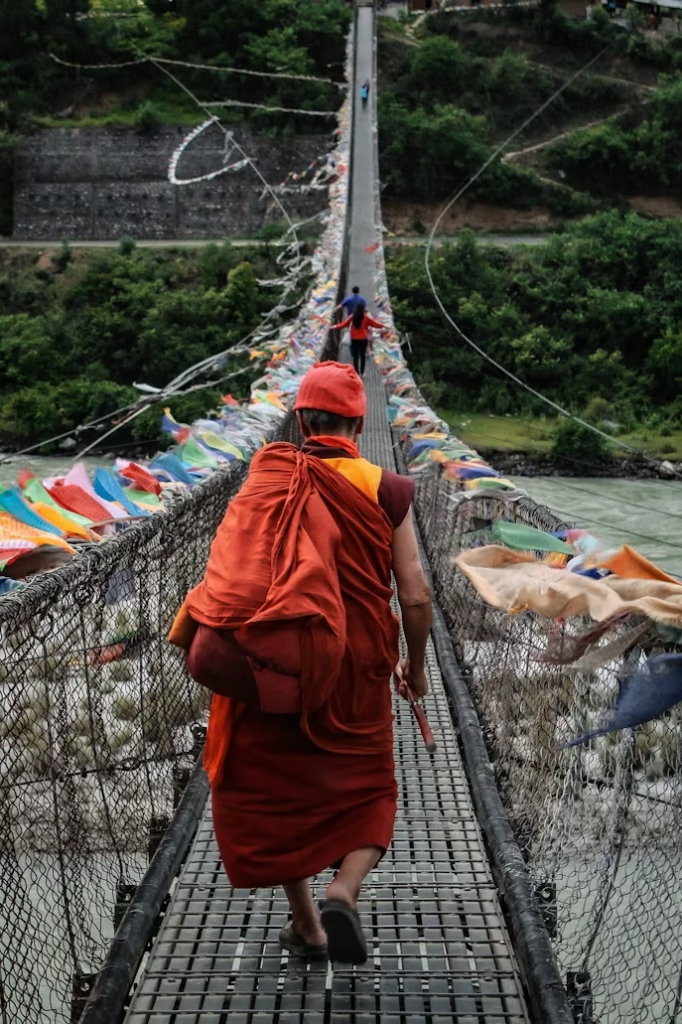
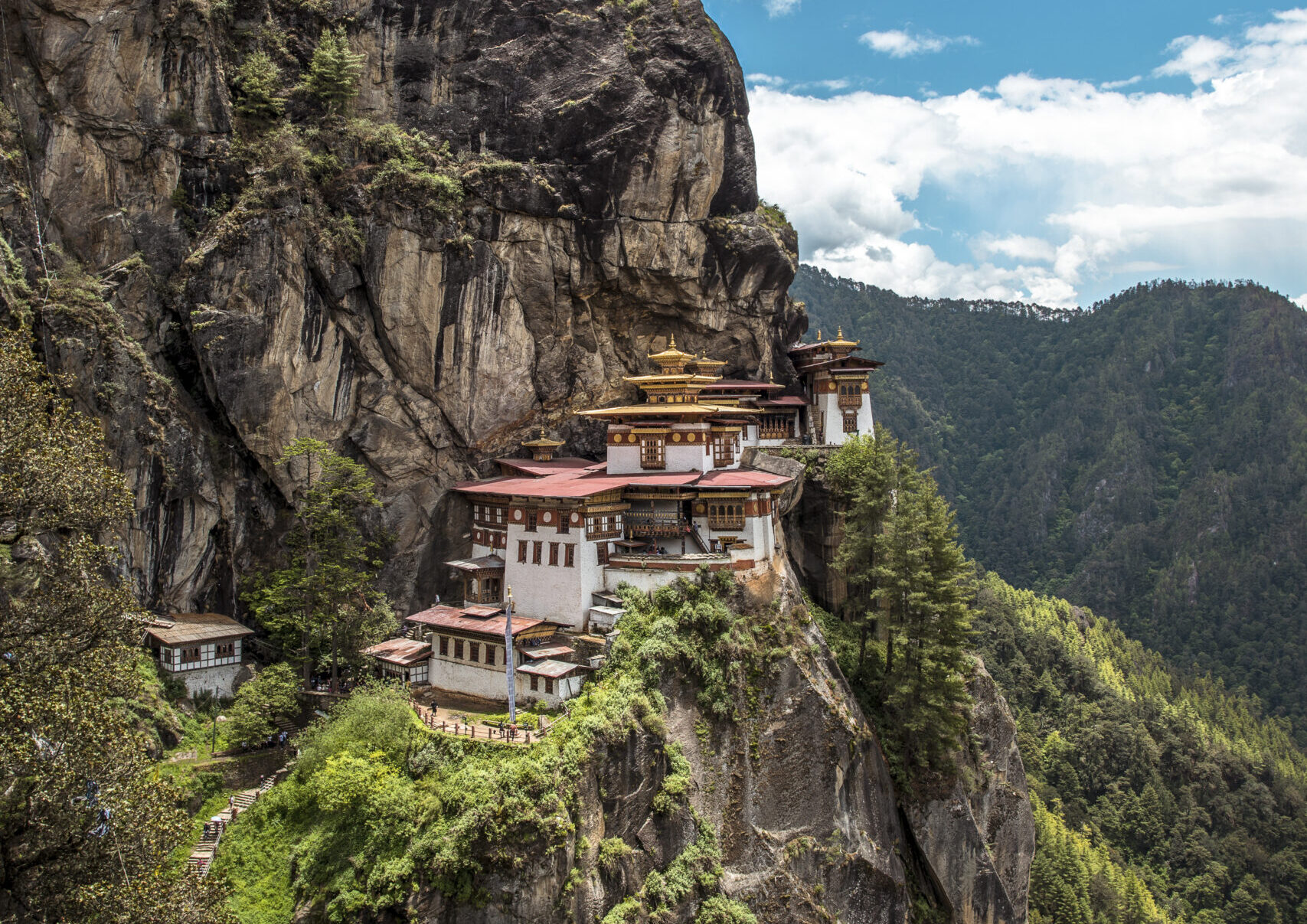
Bhutan measures progress not in GDP but in Gross National Happiness — and as you wander its landscapes, the wisdom behind that philosophy reveals itself. In Tang Valley, Membartsho, or the Burning Lake, shimmers beneath prayer flags, a sacred pool said to conceal treasures visible only to the enlightened. High above, Mount Jomolhari rises in quiet majesty, believed to be the home of a mountain goddess and offering trekkers breathtaking views — and, on rare occasions, a glimpse of the snow leopard. And clinging to a sheer cliffside, Tiger’s Nest Monastery (Taktsang) stands as Bhutan’s most iconic symbol of faith, where legend tells that Guru Padmasambhava arrived on the back of a flying tiger.


Bhutanese Cuisine to Savour
Bhutanese dining is bold, flavourful, and warming, perfect for the high-altitude chill.
Bhutan’s cuisine is as bold and soulful as its mountains, celebrating local ingredients and time-honoured traditions. The national dish, Ema Datshi, combines chilli and yak cheese into a fiery, comforting stew found in every household. Momos, the beloved steamed dumplings of the Himalayas, come filled with meat, cabbage, or cheese — simple, hearty, and endlessly satisfying. Each August, the forests of Ura Valley yield Matsutake Mushrooms (Sangay Shamu), prized for their rich aroma and delicate flavour. Their arrival is marked with a joyful three-day festival, a tribute to Bhutan’s deep respect for nature’s gifts.
Festivals of Colour and Spirit
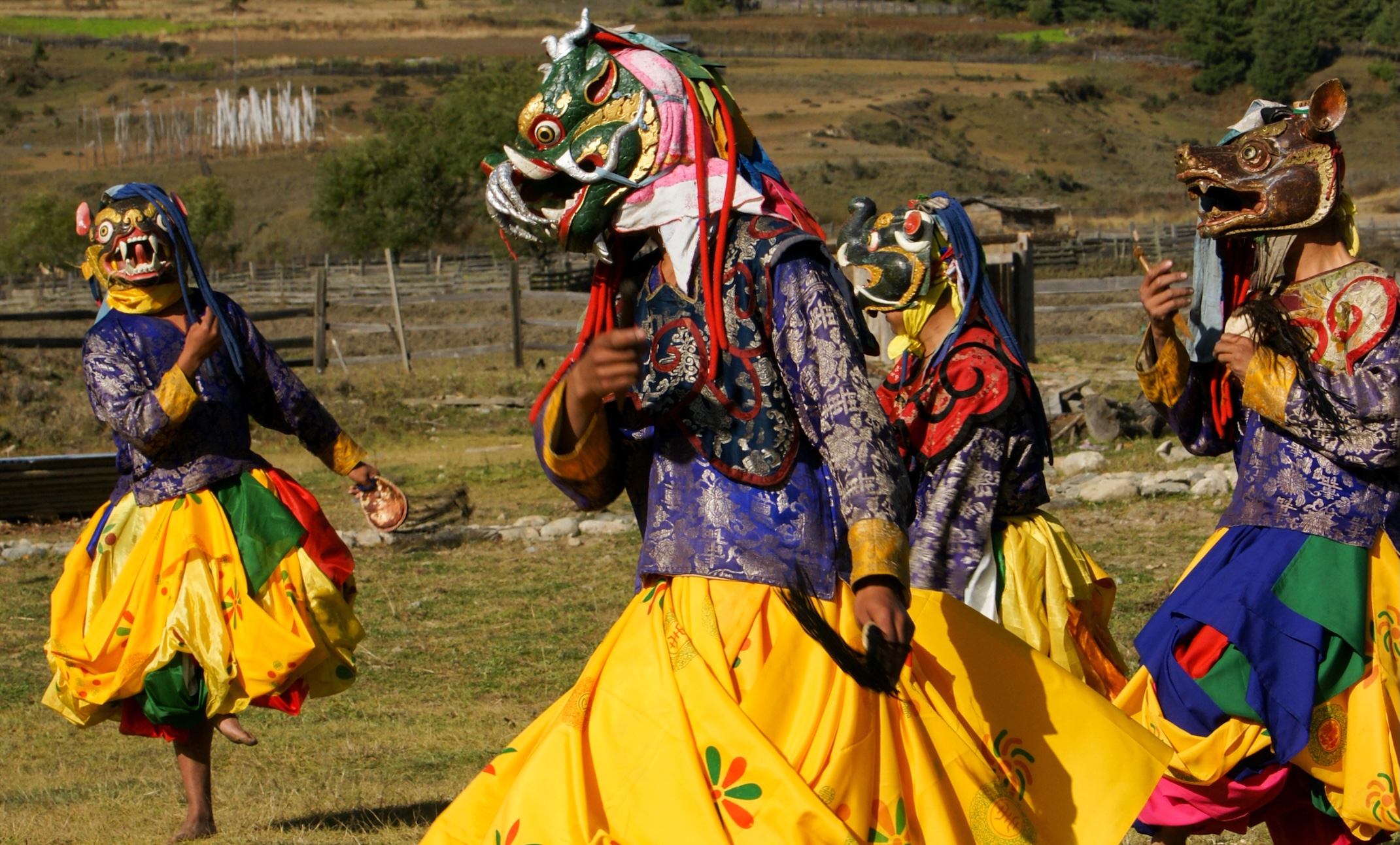
Festivals in Bhutan are not mere performances but living expressions of devotion, faith, and community. During the Paro Dzong Festival, monks unveil the Guru Throngdrol, a colossal thangka said to cleanse all sins with a single gaze. In the capital, the Thimphu Tshechu draws thousands each October to witness masked dances that bless and inspire in equal measure. And come spring, the Paro Tshechu celebrates the legacy of Guru Rinpoche with sacred dances and the display of a 350-year-old scroll, filling the valley with color, music, and quiet reverence.


Crafting Your Journey
Bhutan is a land of sacred mountains, timeless traditions, and rare luxuries, but your journey should feel as singular as the kingdom itself.
At Uniq Luxe, our travel designers have walked Bhutan’s trails, joined its festivals, and tasted its fiery dishes. With us, your trip becomes more than a holiday, it becomes a story worth retelling.
Let us craft your authentic Bhutanese journey, tailored just for you.
Your questions answered
Do I need a visa for Bhutan?
Most international travellers require a Bhutan e-visa, costing USD 40 and taking approximately five working days to process. Visa clearance must be confirmed before you can purchase flights into Paro. Indian, Bangladeshi and Maldivian nationals enter on a permit rather than a visa.
What is the Sustainable Development Fee?
The SDF is a government levy of USD 100 per person per night, paid by all international visitors. It does not include your accommodation, guide or transport. It funds Bhutan’s free healthcare, free education and conservation programmes. The current rate is valid until 31 August 2027.
How much does a luxury Bhutan trip cost?
Luxury lodge rates range from approximately USD750-USD2,500 per night. Add the SDF, your guide, internal transfers and international flights. A seven-night luxury trip typically runs USD 6,500 to 11,000 per person before flights. A 5% GST applies to package components from January 2026; the SDF is exempt.
When is the best time to visit Bhutan?
Spring (March to May) and autumn (late September to November) are the peak seasons, with the best weather and most celebrated festivals. Winter is cold, clear and quiet, with far fewer visitors. Summer brings the monsoon and the most lush landscapes of the year.
Can I travel independently in Bhutan?
You can walk freely in Paro and Thimphu town areas without a guide. A licensed Bhutanese guide is legally required to visit any dzong, temple or museum, and to travel to any district beyond those two cities. Solo travel is permitted, though all guide, vehicle and driver costs are unshared.
How hard is the Tiger’s Nest hike?
The hike climbs approximately 500 metres to reach the monastery at 3,120 metres and takes four to six hours return. It is classified as moderate difficulty. Do not attempt it on your arrival day in Bhutan. Ponies carry you as far as the cafeteria; the final ascent to the monastery is on foot. A viewpoint below the monastery offers a full sighting without the full climb.
Is Bhutan safe?
Bhutan is consistently ranked among Asia’s safest destinations. Crime is very low and solo travellers, including women, report feeling entirely at ease.
What is the internet like in Bhutan?
4G coverage is reliable in Paro, Thimphu and Punakha via B-Mobile and TashiCell. It becomes limited or absent in the eastern districts and on remote trekking routes. Hotel Wi-Fi is widely available, though bandwidth can be modest. International eSIMs work across the main valleys and local SIMs are available at Paro airport on arrival.
What should I pack for Bhutan?
Pack layers regardless of the season — valley and mountain temperatures can differ by 15 degrees on the same afternoon. Bring modest clothing for religious sites: covered shoulders and long trousers. Good walking shoes are essential even if you are not trekking. A waterproof layer is useful in every month of the year.
Journeys
Explore crafted itineraries that spark imagination — where landscapes, flavors, and stories weave together into extraordinary experiences worth remembering.
Explore More
WHY CHOOSE US
Beyond The Itinerary
We design journeys thoughtfully — shaped by firsthand experience and an instinct for what truly matters to you.
Get to Know Us
Stress-Free
Trip planning doesn’t need to be overwhelming. We take care of the details, leaving you free to enjoy the anticipation.

Uniquely Yours
No templates. Every journey is built from scratch, designed around the moments that matter most to you.

We Live It First
We explore these places ourselves and work closely with trusted local partners. Our recommendations come from experience, not brochures.
Ready to plan your priceless moments? Connect with our Travel Designers.
Let's ChatUnveil the Stories
Discover destinations and partners we love — curated tales to inspire journeys filled with culture, connection, and quiet wonder.